The other day, I ran into a bug : an extension that threw up an error message as mysterious as it was frustrating. My first reaction was to copy and paste the message into my browser and start searching. And there, as is often the case with Joomla, it was a foreign forum that gave me the clue (in my case the Dutch one).
Behind this phrase lies not yet another article on how to create and restore a backup – not that the subject isn’t interesting, but it’s been covered so thoroughly in the Joomla community. No, today we’re going to talk about our relationship with others and with ourselves: a highly philosophical subject, isn’t it? So what could it be?
A few weeks ago, just for a bit of fun, I used AI and shared in a Joomla group a picture of a mate dressed up as Super Joomler! Let's be honest, it was also a bit to show off!
Bad move on my part!
Joomla is a CMS that is completely free and open source. This means that anyone, anywhere in the world, can create a professional website without paying for a licence, without hidden subscriptions and without dependence on a proprietary publisher. This freedom is one of the fundamental pillars of Joomla: the software is open, accessible and evolves thanks to its community.
Joomla.org has long served a global and diverse community of users, from those encountering content management systems for the first time to experienced developers and contributors deeply involved in open-source projects. Ensuring that this broad audience can find clarity, purpose, and direction on the site continues to be a central challenge for the Joomla project.
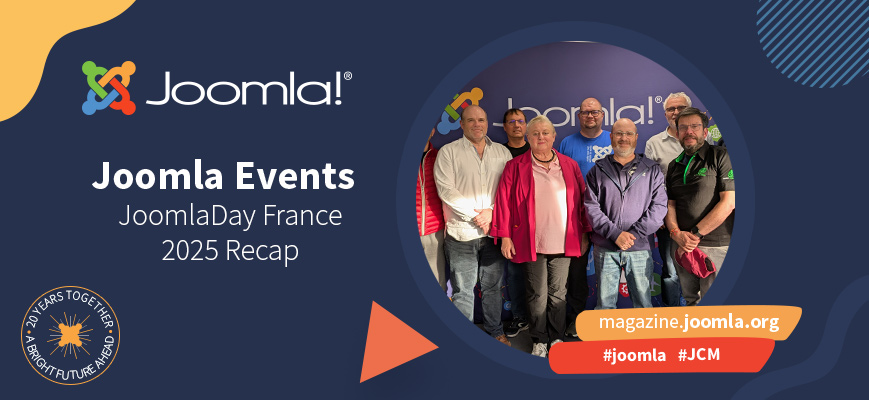
On 17 and 18 October 2025, the French-speaking Joomla community gathered in Metz for a new edition of JoomlaDay France. Two days rich in exchanges, conferences and conviviality, organised by the AFUJ at Techno'Pôles CESCOM.
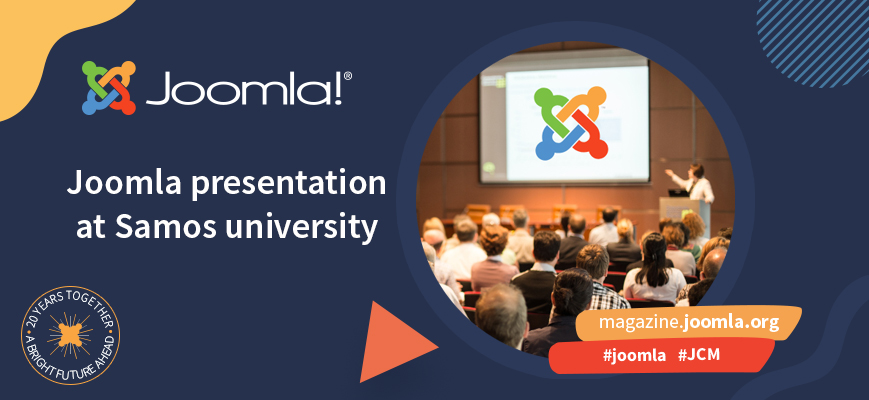
In October 2025, members of the Greek Joomla community, led by Bill Kotsias, were invited to speak at the University of the Aegean in Samos. Their goal: to introduce Joomla — one of the leading open-source CMS platforms — to students and educators in Greece.
Under this somewhat provocative and enigmatic title, I would like to discuss a syndrome that is common in the community, and I am pretty sure you will recognize it.
Recently elected as Vice President of Open Source Matters, Emmanuel Lemor took a moment to reflect on his journey and share his early impressions in this new role. With nearly 30 years of experience in the tech industry — as a CIO, CTO, Head of Product, and consultant — Emmanuel has long maintained a strong connection with Joomla, often recommending and using it throughout his career.
Many Joomla users are familiar with Falang, the well-known multilingual extension — but few know the story of the developer behind it: Stéphane Bouey.
By accepting you will be accessing a service provided by a third-party external to https://magazine.joomla.org/