Our April issue has something in store for every Joomla user, from content manager to code poet and from beginner to developer. Like every month, our awesome volunteer authors happily share their knowledge with you, our readers. As you may know,...
In just a few short weeks, a disparate group of Joomla volunteers across multiple disciplines will convene in Paris for a two day Outreach Sprint.
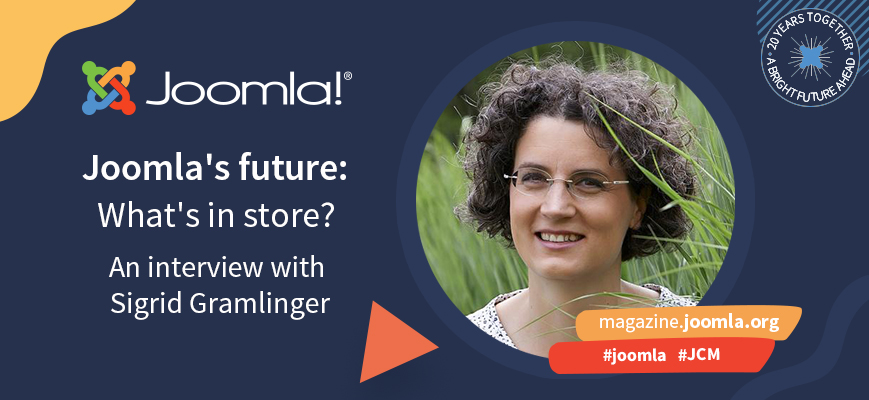
Since 2023, Sigrid Gramlinger has been the Coordinator of Joomla's Production Department. She just got re-elected for another term. In this interview, Sigrid tells us more about her department, the responsibilities, the achievements and the strategy for the future.
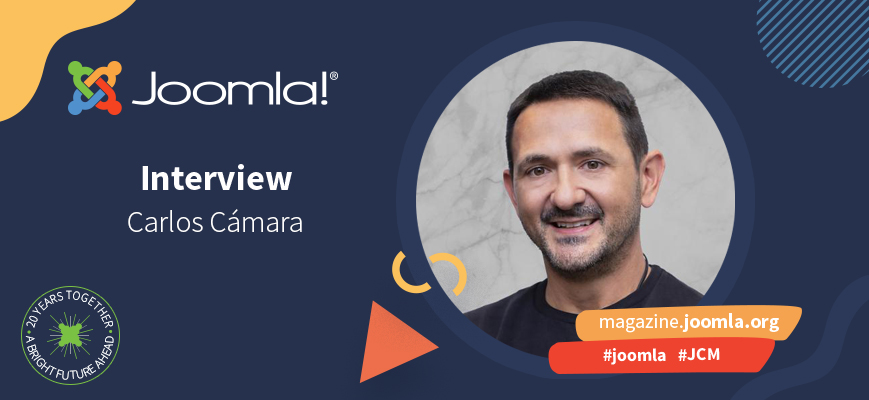
The teams in Joomla’s Operations Department are our enablers. They’re the quiet and unobtrusive teams, working silently in the background on everything the other teams need to get their jobs done. Carlos Cámara, coordinator of this department (and just elected for his third term), tells us what his department does and why he likes it so much.
This is the start of a series of articles about building custom plugins. We will start with some general information about plugins and creating them. In subsequent episodes of this series we will take a closer look at specific plugin types and their peculiarities.
In Joomla 6.1, custom fields just got significantly more flexible. Until now, the Media custom field type only let you select images but thanks to a core enhancement in Joomla 6.1, you now have dedicated field types for audio, video, and documents in addition to images. (github)
If you follow my writings, you probably know that I try to use as few extensions as possible. Not because I don’t like extensions, but because I like to keep the websites I create as easy to maintain as possible. There are many cases where extensions absolutely make sense: events calendars, big image galleries, file downloads, etc. In other cases I’m sure I can handle the request with Joomla core and some overrides, because Joomla is a very powerful system.
With Joomla 6.1 now available, attention turns to what comes next. Joomla 6.2 is scheduled for release on 13 October 2026, and at the helm are two release managers who bring very different backgrounds to the role. This month we meet Charvi Mehra, whose journey into Joomla began not through code but through a university semester project in Delhi.
Are you a company, an agency, an extension developer, a template provider, or an enthusiast? Are you wondering what sponsorship is and whether it applies to you? Then let's discover together why you shouldn't miss this opportunity, whatever your goals and resources.
When I write for the Joomla Community Magazine, I usually do so with my " I'm a regular Joomla user, integrator, website builder " hat/mindset... but I also have other hats, like being a volunteer for the project in different teams, and at least one other hat, that of having the honor of being on the OSM Board as Vice-President.
With Joomla 6.1, a small but powerful enhancement was added to the TinyMCE editor: dedicated buttons for inserting, editing and removing the HTML <abbr> element.
"Hello Rachel… I think we have a problem… Google is listing the wrong pages."
Sadly I’d heard it before.
And sure enough, when I took a look at the site I was right. The client had been busy renaming blog articles, changing menu items all for better SEO rankings. The idea was right, but nobody had told Google.
Open source does not work by accident. It works because people show up. We often describe that effort as "giving back". It’s a useful idea, but it may also be limiting how we think about contribution.
Joomla is well known for its flexibility. Its menu system is powerful, its module architecture solid, and in the hands of experienced developers it can scale from simple websites to complex platforms. But anyone who has worked extensively with multi-level menus and multiple modules has likely run into a recurring frustration: the lack of module inheritance.
The other day, I ran into a bug : an extension that threw up an error message as mysterious as it was frustrating. My first reaction was to copy and paste the message into my browser and start searching. And there, as is often the case with Joomla, it was a foreign forum that gave me the clue (in my case the Dutch one).
Having a good relationship with your clients is essential. When they are happy, enthusiastic and confident in your work they are keen to stay with you. Getting to that stage can take some effort though.
Why should you join the Joomla World Conference? How did Angie Radtke experience her short term on the Board as the Secretary of Open Source Matters? What opportunities does Joomla offer for young developers looking to contribute to Open Source and...
Joomla is calling for a new President of Open Source Matters and it’s not just about having a title. It’s about empowering the community, lifting others up, and helping Joomla move forward together.
When most people think of Joomla, they think of a traditional content management system that handles everything: storing content, managing users, rendering templates, positioning modules, and outputting complete HTML pages. For the vast majority of websites, that integrated approach makes perfect sense.
1 Introduction
In the past, many people were typically using Postman as API Client when testing Web Services / APIs.
More recently, many users have moved from Postman to Bruno. Here are the main reasons:
By accepting you will be accessing a service provided by a third-party external to https://magazine.joomla.org/