Sitebuilders, you know the scenario; a new client has no idea about Joomla and what it does. They want a new web site or web app and they don’t care what CMS you use and they need it do something very specific, something bespoke.
A couple of days ago I came across yet another article announcing the decline of Joomla and the ascension of WordPress. As an admirer of the author's past work and presentations, at first I expected this would be some kind of fun article. I was astonished to read a serious article, where WordPress, Wix, Orkut, Facebook, journalists, and digital media agencies were cited as an anticipation of Joomla's demise.
Many Joomla questions on Stack Overflow (SO, a "Q&A for professional and enthusiast programmers" website) get killed off because they are not within the defined realm of questions for SO. As a result, many regular SO users are trying to get a Joomla Q&A site set up. The effort is in the commitment stage, and at this writing we've just passed the 50% mark (now 72%) and we need your help.
From March 10 - 14, CeBit, the world's largest IT fair opened its doors in Hannover, Germany. CeBIT is by far the most important IT related fair in Europe and also has a big international impact, which is underlined by the fact that this year’s CeBIT was visited by people from more than 100 different countries. Like last year, the Joomla! project, represented by a team of well known volunteers from the local community, was part of the CMS Garden booth in Hall 6 at the event.
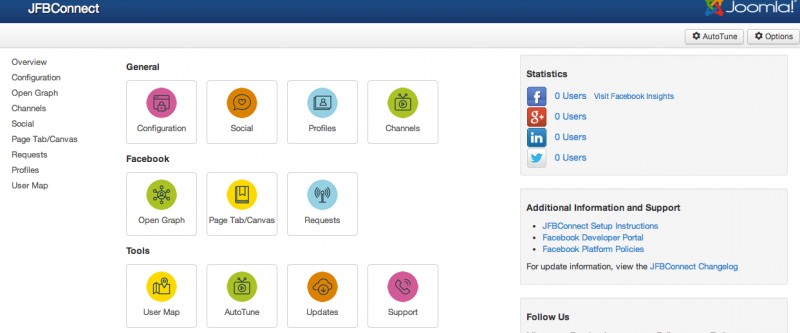
Social media is HOT these days… or at least that’s what people say. So let’s have a look at JFBConnect and review whether the extension does the trick integrating social media into Joomla without using too many API’s.
The “core” components provide several valuable features like tags, versioning, and ACL settings per category. These features are available for integration and use in third-party components, but too often these components ignore them. Here is a list of the ”core” features I look for when I evaluate components. Think about them, and you might find that you want them, too.
We’ve all done it – worked for months on a migration, put in all the finishing touches, uploaded it to our server and closed our eyes (and probably crossed our fingers) while turning our shining new website live to the world. I expect many of us have also done this without thinking about the changes we might have made in the process, and particularly without considering any impact this might have on our position in search engines. I hope that this series of articles will give you some ‘top tips’ of things you must do before, during and after your migration to maintain your hard-earned search engine optimisation and avoid incurring penalties post-migration.
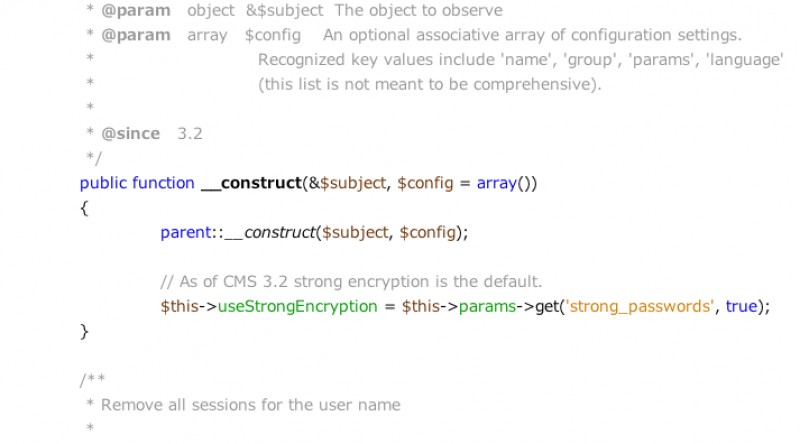
Third in a series of articles on practical development. The advantages of dealing with your Project through an in Integrated Development Environment (IDE) such as PHP Storm. Consult previous articles in this series.
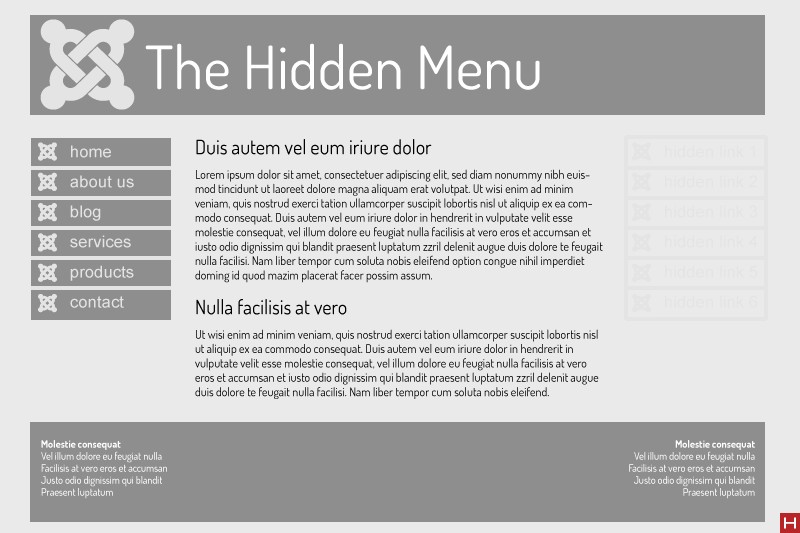
Have you ever wanted to add a link to an article from within another article,without adding that linked article to your site's Main Menu, but but were frustrated trying to get your favorite selection of modules to be displayed with the article? The answer to managing the display of modules lies in using a Hidden Menu. (Also called an Invisible Menu.)
These have been busy days in our community, the like of which has rarely been seen before. Twitter has been burning with feedback accompanied by the Joomla! hashtag, and that's fine. It is good to see the community actively involved, even on issues that generate passionate discussions. We are all members of the same community.
By accepting you will be accessing a service provided by a third-party external to https://magazine.joomla.org/