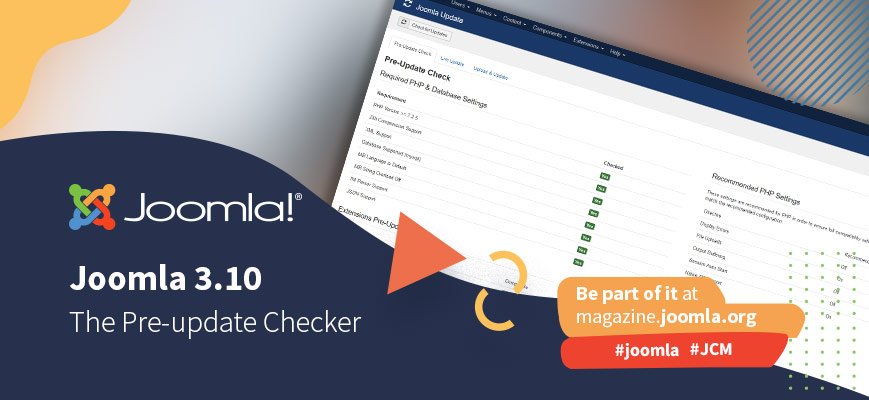
After our previous series last year about how extension developers are getting their extensions ready for Joomla 4, we now have contacted a few developers in how in hindsight this transition went and if they came across challenges.
Once, there was a time when testers had to manually test everything in Joomla, clicking through all the views and features each and every time a change was made. It was exhausting, cumbersome and prone to errors.
Along came Selenium! A tool to automatically control browsers, defining long click paths through all of Joomla, repeatable, reliable, not exhausting and requiring less people-power. And the testers saw all the tests that they made, and it was very good.
What if there would be a completely free and open source, fully portable WAMP development stack, created with Joomla developers in mind? Guess what: there is! Two Joomlers are working on it. Troy Hall decided to create (or rather, fork) it, Jacob Waisner joined him in the project, and Bearsampp is now available for everyone to use. Find out what it is, who it is for and what you can do with it!
In a hotel conference room in Darmstadt, Germany, a small team of Joomla enthusiasts got to grips with Docusaurus, taming the beast to the advantage of the Joomla developer community. This neat package of software is probably the most important change in Joomla documentation for a long time, and with the added bonus of slaying the dreaded MediaWiki captcha once and for all!
If you’ve taken a look at Joomla 4 Beta, you’ll have noticed large changes in the layout of the Administration area in the backend of the site. The new Admin Dashboards form part of the restructuring of the Joomla 4 UX and are designed for site managers to optimise their site management experience for themselves or clients quickly and easily.
Have you ever wondered what goes on in departments? Or heard people within the community talk about ivory towers, them and us, hidden agendas and wondered if any of that was true? The reality is much more boring than a conspiracy theory. When volunteering, giving your time to write code, the part everyone hates is writing the documentation, and writing a forward plan (roadmap but less solid, aspirational) comes at the very bottom of the priority list!
We sit down with long time contributor, all around nice guy and Joomla 4.2 release lead, Roland Dalmulder, to hear what he gives and receives from the Joomla community. You can check out Roland's Joomla extensions on https://rolandd.com/ which he was too nice to promote himself in his answers.
As we celebrate the launch of Joomla 4.1.0 and enjoy the new features and functionality that it has brought to Joomla there are a few who have been working away on the next iteration of this rejuvenated CMS.
All developers love to know the right way to achieve something. Often it's through trial and error but in this article Dimitris Grammatiko shares his insights and presents the definitive way to add images in Joomla 4 as well as how you can backport these advantages into older Joomla versions. Dimitris explains the history and usage of native support for lazy loading images and also with a new concept of adapters for storing images, both of which shipped in Joomla 4.0.5.
If you’re used to working with another content management system and creating your first Joomla website, you may wonder how to make your pages. Joomla doesn’t have a built-in page builder and the pages are by default content-driven.
By accepting you will be accessing a service provided by a third-party external to https://magazine.joomla.org/