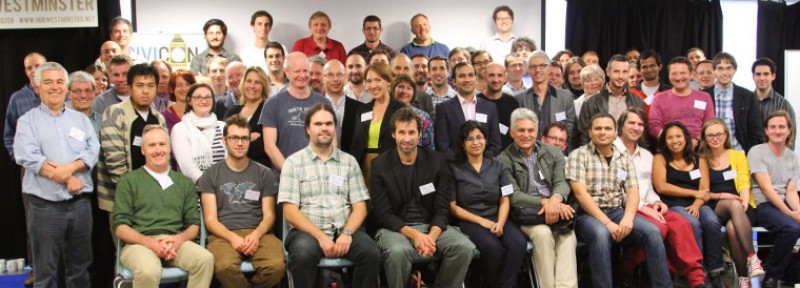
Registration is now open for CiviCon London 2013. The two day, annual CiviCRM user and implementer conference is Europe's biggest Civi meetup. CiviCRM is an open source CRM aimed at non profits with out of the box integration with Joomla! Whether you're already using or considering using CiviCRM, the conference will be packed with the essential presentations, workshops and people that will help your organization get the most from CiviCRM.
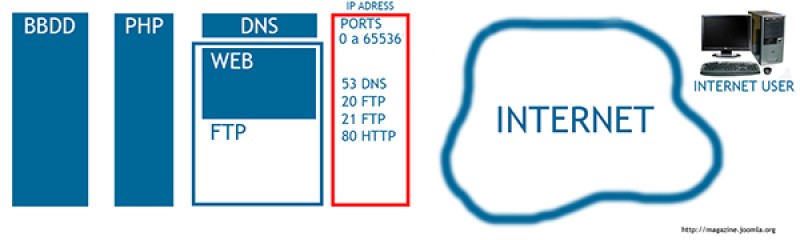
This article summarizes the first hour of my introductory course to Joomla. It's a bit "thick" as it’s about system architecture concepts for which the user does not normally have professional knowledge. So try to go slowly, be patient and don’t get discouraged. Draw the examples in the text, copy the pictures and you will see that in the end you had fun.
To SEO or not to SEO, that is the question! There is a wide variety of views on the topic, whether it is necessary to use specific extensions that improve SEO positioning, if it is a good idea to employ people to help with this and to create strategies etc….or, whether that doing all of this won’t pay off as you are forced to change strategy each time Google makes changes to their SEO policy...
Being a part of the community I sometimes wonder how I started 6-7 years ago with Joomla!... We didn't have Facebook or Twitter, where we could ask for support or help with extensions. These days I wonder if newbies (sorry for the terminology) know how to search in the JED. Search in the WHAT...?
In an effort to walk the thin line of balance between the for- and not-for-profit dynamics in our project, we recently made a change on the magazine limiting JCM author links in their bios. This debate is something Dianne and I face every day as Co-Lead Editors on the Joomla Community Magazine, and also as members of the board of Open Source Matters, Inc. (OSM). What is fair? What is proper? How can we know, and what do you think?
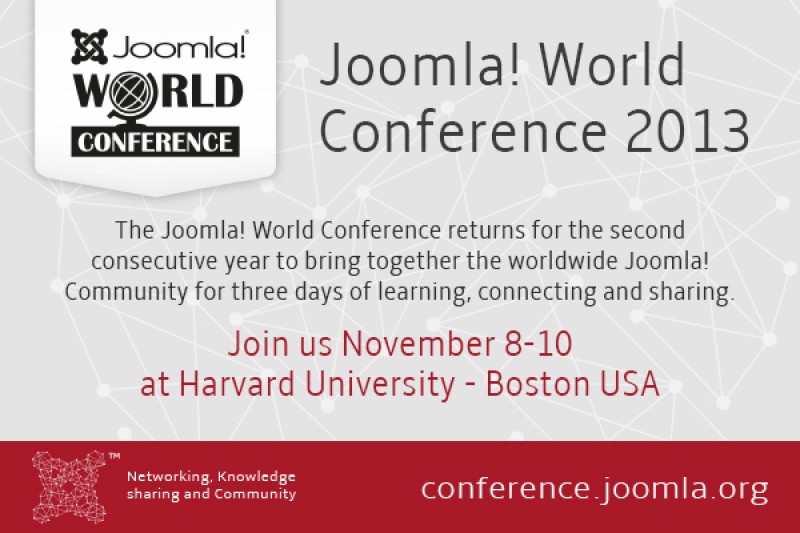
Even with the summer vacation well underway, the Joomla! World Conference Team has been busy behind the scenes planning what will be an awesome event!
It is known that the text editor in Joomla allows special configurations needed to incorporate content in the code. There are times when I do not want to change these settings to keep some order on our website for the authors, but nevertheless we would like to add modules with PHP or XHTML code, as in the case of widgets. The subject of this article, by way of tutorial, is to explain how to enter Javascript, PHP, HTML or CSS code in modules without relying on the editor you have installed (JCE, TinyMCE, FCK, etc..). As an example, I will illustrate how to add a Twitter widget to your website.
This is Step 2 in the Rebuilding Our Site series. We had to upgrade from Joomla 1.5 to 2.5. This entry discusses the tools and tactics we considered when upgrading to a newer version of Joomla.
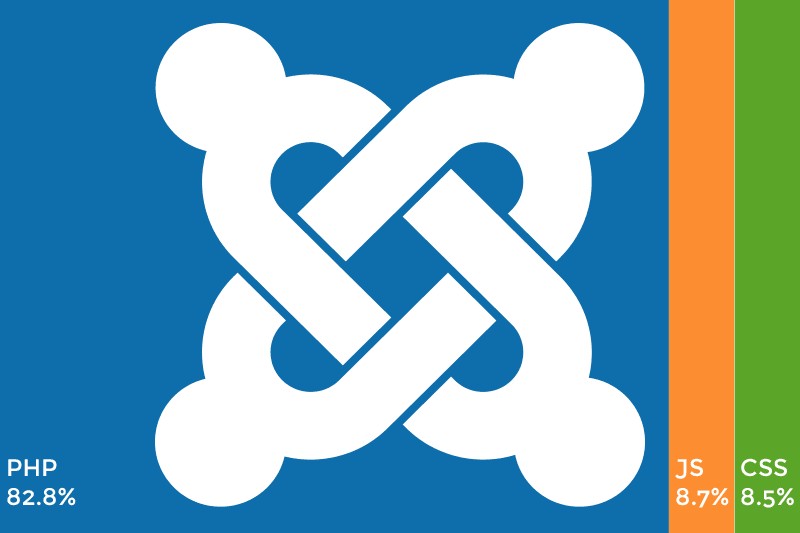
Today, the Joomla CMS is mainly implemented using PHP where JavaScript (JS) and CSS are contributing as minor supportive technologies. Joomla mainly uses JS to improve usability by providing rich interactions and responsiveness, but is it done right? Can we improve it? What are the new technological advancements related to JS? Can we use these in Joomla? This article is an attempt to answer these questions and bring more attention to improving Joomla CMS’s JS usage.
With 164 user groups around the world, there is always something exciting and interesting happening in the Joomla! Community - and I hope to produce a monthly round-up highlighting new Joomla! User Groups, events, and reviews of JUG meetings.
If you have anything you would like me to feature from your Joomla User Group please email me at
By accepting you will be accessing a service provided by a third-party external to https://magazine.joomla.org/