 Community Magazine
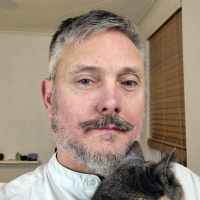
Joomla 6.2 Release Managers - Part 2: Martin Kopp

Last month we met Charvi Mehra, the first of two release managers steering Joomla 6.2 towards its October 2026 release. Now we turn to Martin Kopp, a 30-year IT veteran from Switzerland who leads the Bug Squad, mentors GSoC students, and was part of the MCP server discovery sprint that explored AI-powered Joomla administration. Martin co-managed Joomla 4.4 alongside Allon Moritz and returns for 6.2 with experience and, as you will discover, a sideline in DJing.
To start off, could you tell us a bit about yourself? Who are you, where do you come from, and what's your background, both professionally and personally?
Martin: I am Martin from Switzerland. I live near Zurich in Uster. I am a proud father of two grown up sons and three grandchildren. I started early, my sons started early. I'm not that old! I studied Information Technology in the 80's, learning Assembler and Modula-2 (the successor of Pascal) and building a compiler. One of my teachers was Niklaus Wirth, the inventor of Pascal. For 30 years I have run my own company, infotech.ch. Not only websites, but all my websites run on Joomla!
Everyone needs something outside the code. What do you enjoy doing in your spare time that has nothing to do with Joomla or the web?
Martin: I'm a DJ and bartender at parties in and around my hometown. Mostly voluntary work, just for fun (and free drinks after work), and I do some sound engineering for bands.
Every Joomler has their origin story. How did you first discover Joomla, and what made you decide to try it?
Martin: I was already running my own company since 1998 and I already had websites with the technology I learned earlier: Delphi and Href's Webhub, a proprietary technology. Around 2005 I was asked to do a dating website which needed more distributed management, and so I discovered PHP and Joomla. The website had some technical innovations but was a financial failure.
Joomla is a global community. You have been a driving force in the DACH (Germany, Austria, Switzerland) community and have helped organise JoomlaDay DACH since 2020. What is distinctive about the German-speaking Joomla community, and what role does it play in the wider project?
Martin: In recent years Joomla! has stronger support in Europe than at the start. I only realised that when I was more involved since 2019. Around 2020 there was a call in the Swiss community for a representative for Switzerland, and I ended up in the team organising the online JoomlaDay DACH 2021. It was easier to enter a community in the native language. But most of the meetings are held in English, and there is no easier way to brush up a language than to talk. And it's fun to interact with people all over the world.
You lead the Bug Squad, which is one of those teams that does essential but often invisible work. Could you tell us what the Bug Squad actually does day to day, and how you ended up leading it?
Martin: I have been a member of the Bug Squad since 2022 after my first "live" JoomlaDay D-A-CH in Bad Hersfeld. We have quite a big public channel on Mattermost where everyone can join and discuss bugs. We confirm bugs and try to find developers to fix them, or end up fixing them ourselves. Quite honestly, I'm struggling to find and assign coders to fix stuff.
You co-managed the Joomla 4.4 release with Allon Moritz, and you have described him as your mentor for learning the release process. What did that apprenticeship look like in practice, and what did you take from it into 6.2?
Martin: From Allon I learned GitHub stuff in depth, and that building a Joomla release is not witchcraft. And it was quite an experience to produce a release on your own computer that will be distributed all over the world.
This time you are paired with Charvi Mehra, who brings a very different background to the role. How are the two of you dividing responsibilities, and what is it like working together?
Martin: I admire her youthful enthusiasm, and I call her my "III": Incredible Indian Intelligence. I hope that we don't need to divide responsibilities but rather share them. A final verdict on working together I can only give in a year!
You were part of the MCP server discovery sprint in January 2026, exploring AI-powered administration for Joomla. How do you see AI tooling changing the way people build with and manage Joomla in the coming years?
Martin: AI with use of the MCP Server helps managing a greater count of websites with your own words. So for instance you can say "Clear the cache of all my websites." Proof of concept is done. We are just at the beginning. I think we need to be very open to AI. A lot of refactoring needed can be done by AI.
Your professional background includes Delphi and Lazarus alongside PHP, which is quite an unusual combination in the Joomla world. Does that wider programming experience shape how you approach the Joomla codebase?
Martin: What I like most about Delphi, Pascal, and Lazarus is that you compile the source and you eliminate most typos or variable mishaps from the beginning. But I learned over the years: use whatever works. For PHP there are some tools nowadays that eliminate most of the mistakes. Think of PHPSTAN, for instance.
You are also a GSoC mentor. What is it like mentoring student contributors, and what do you look for in a good GSoC proposal?
Martin: I was co-mentor last year. I'm not involved that much this year. From the experience of last year, it is more important that the contributor stays with Joomla than the proposal itself.
Let's talk about the road ahead. What are your main goals or priorities for Joomla 6.2?
Martin: We are looking to improve Joomla for larger websites in terms of performance and manageability, and we would like to integrate the AI Framework developed by Charvi for GSoC 2025.
The release process depends on many helping hands. From your perspective, how can the wider Joomla community best support the upcoming release?
Martin: Make propositions for features in the new release that are within the Joomla! roadmap. Testing new releases is key: testing with copies of existing websites, since every website has its unique features that can break with new releases, even if the possibility is marginal. And I would like to have more feedback from extension developers.
Finally, is there anything you would like to say to the Joomla community?
Martin: If you want to have some influence: join a team! Last thought: Joomla! has a bright future. Just spread the word outside our "bubble."
Some articles published on the Joomla Community Magazine represent the personal opinion or experience of the Author on the specific topic and might not be aligned to the official position of the Joomla Project
About the author
By accepting you will be accessing a service provided by a third-party external to https://magazine.joomla.org/
Comments