 Community Magazine
Joomla Summer of Code
This summer four students/contributors will write code to help Joomla move forward. In this article we’ll introduce them and their projects about automated workflow, multi-category support, translator feedback for automatic translation and Ajaxifying the backend. Exciting times ahead!
Selecting a few out of many brilliant applicants
Worldwide this year 15245 people from 131 countries applied for Google Summer of Code (GSoC), divided over 183 mentoring open source organisations. Since some years not only students can apply, so the more general term ‘contributors’ is used. The applicants submitted a total of 23371 proposals for projects. From those proposals the mentoring organisations requested 1681 projects from Google (7% of the submitted proposals), from which 1140 were granted by Google (68% of the requested slots).
Joomla was accepted as a mentoring organisation again this year (yeah!). A total of 183 people expressed their interest in contributing to Joomla via GSoC in 2026. They submitted 151 proposals for a Joomla project this summer. From these proposals we selected 4 projects (2.6% of the submitted proposals), from which 3 slots were granted by Google.
Selecting the contributors is quite some work. Most proposals were well crafted, made by talented coders. But we only had enough mentors for four projects. We didn’t only look at the proposals:
- We asked the applicants to do a coding assignment to show their Joomla coding skills.
- We had interviews to talk about that coding task.
- We looked at community involvement. Did they make useful pull requests? How did they interact with the reviewers of those pull requests?
In the end, the main purpose of all this activity is not only to get some coding work done, but to get a new generation of coders interested in an open source project like Joomla.
We were not only selecting some contributors to do a project this summer. Many new people were introduced to Joomla, who might otherwise hardly have heard of it. Some learned to code specifically for Joomla, and some made really good contributions in the process. Thank you all for your work and we hope you will stay in our community, even if not selected.
In last month’s edition of this Magazine you can read an interview with Krishna Gandhi, who was unfortunately not selected for last year’s GSoC, but stayed around for Joomla. This year he was selected after all.
Joomla Academy to the rescue!
Of course we were very happy to get three slots for GSoC this year. But we had spent some months selecting four projects, so we were also a bit disappointed we didn’t get them all four, like last year. The projects were in a rather arbitrary order, all four are valuable.
Happily the Joomla Academy came to the rescue! Here is an interview with Philip Walton about the Joomla Academy from 2024. Last year the Joomla Academy did two projects, besides the four we did via GSoC. A fantastic initiative, supported by the community.
The Joomla Academy offered to host our fourth project for this year! That is great, and made possible by the sponsors of the Joomla Academy. Thank you very much! Emmanuel Lemor as vice-president of OSM will handle the administrative part. So we can welcome Adarsh Dubey to do the Ajaxified backend project for the Joomla Academy.
From students to mentors
We are always looking for mentors to guide our students/contributors. Read more about why you should be a mentor in this article. This year three of our mentors are former GSoC students: Charvi Mehra and Dileep Adari were GSoC contributors themselves last year, and Tushar Malik an OSPP (Open Source Promotion Plan, a Chinese summer program, comparable with GSoC) student in 2021, creating our Task Scheduler. Tushar also was a mentor last year (for the project Charvi did), and has been mentor before, a.o. in 2023. Charvi is now also Release Manager for Joomla 6.2; you can read an interview with Charvi in last month’s Magazine edition. And here is another article from October last year starring Charvi: Build, Share, Grow: Open Source is your Fast Track to Becoming a Better Developer. In that series about young Joomla developers there also was an article about Dileep in the December edition: Your Code, in the Wild: Opportunities Inside the Joomla Ecosystem. Our org admin Shivam Rajput also came to Joomla for GSoC and leads the GSoC and OSPP already for years.
This shows that it works: people who came to Joomla via GSoC, OSPP and the Joomla Academy, have not only worked on significant parts of Joomla during their summer projects, but have also become active members of our community.
The four contributors and their projects
Adarsh Dubey (India):
Ajaxifying the backend and autosave
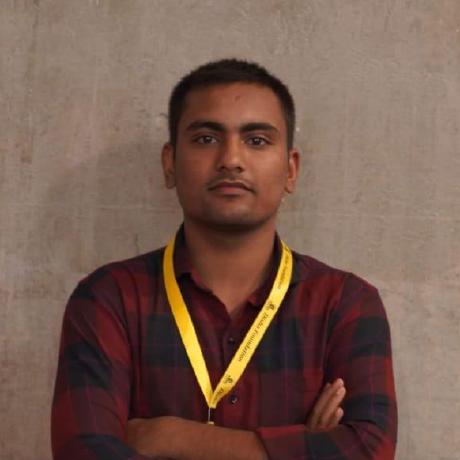
Joomla Academy project! This project introduces three backward compatible features: Ajax based handling of list actions to avoid full page reloads through partial rendering, a server side autosave mechanism to preserve editing progress without triggering versioning or plugin events, and integration of custom field filtering into the existing filtering system using a query level approach.
Mentors: Dimitris Grammatikogiannis, Tom van der Laan.
Supported by Martina Scholz.
Weno Billy Hans (Cameroon):
Automated workflow

Joomla's workflow system and the scheduled task system currently work independently of each other, and this project aims to connect these tools by creating an Automated Workflow feature that combines both systems, which will enable administrators to configure timed rules directly within the workflow transition configuration, specifying how long after entering a stage an item should automatically be moved to the next stage, supporting both straight workflows and loops. A background scheduled task plugin will then execute these transitions at defined intervals.
Mentors: Tushar Malik, Dileep Adari.
Reda Mohamed Shewil (Egypt):
Multi-category support

Problem: Currently, Joomla items such as articles are limited to a single category, which makes it difficult to organize content that belongs to multiple contexts. While tags are sometimes used as a workaround, they do not integrate with core features such as routing, menus, and structured layouts in the same way as categories. Solution: This project introduces multi-category support by implementing a generic mapping table. It preserves backward compatibility and SEO integrity by using a "Primary Category" as the main reference for routing, workflows, and parameter inheritance.
Mentors: Christiane Maier-Stadtherr, Viviana Menzel.
Krishna Gandhi (India):
Translator feedback for automatic translation

This project uses translator feedback to improve automatic domain specific translations, focussing on Joomla specific translations, using the experience of our translation teams. This project will work by capturing human corrections and injecting them into future LLM prompts via a decoupled RAG architecture. It will be delivered as a separate extension package.
Mentors: Herman Peeren, Charvi Mehra, Stefan Wendhausen.
This Joomla summer
We are now in the phase of preparing our contributors for their tasks: to get them up and running to code for Joomla. Coding will be mainly from June to August. Articles from the contributors about their projects are planned for this Magazine in June and September. And of course you can see the results at the Joomla World Conference in October.
Some articles published on the Joomla Community Magazine represent the personal opinion or experience of the Author on the specific topic and might not be aligned to the official position of the Joomla Project
About the author

By accepting you will be accessing a service provided by a third-party external to https://magazine.joomla.org/
Comments