 Community Magazine
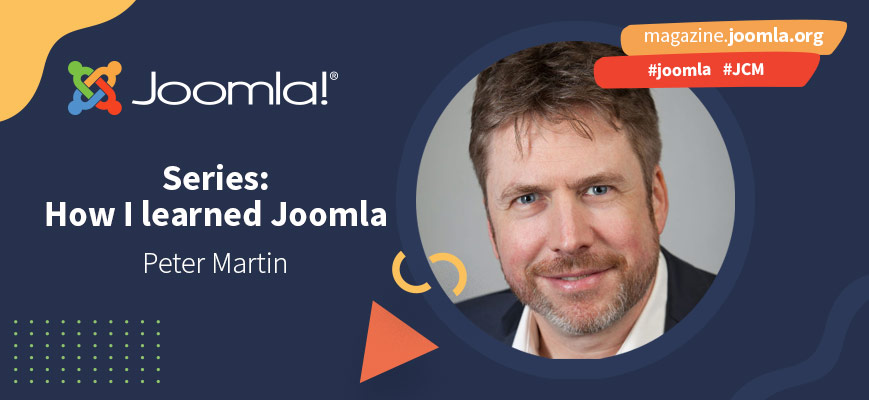
Peter Martin’s very first website was a one-pager. And no, not last year: in 1996! You could say he was way ahead of his time. Peter loves open source (he’s also an active member of the Linux community) and he likes working with Joomla because of its stability, flexibility, extensibility… and us, the community. He learned Joomla by getting his hands dirty and examining what goes on under the hood.
Thanks for sharing your story with us, Peter! Could you tell us a little about yourself?
I'm Peter Martin and I live in Nijmegen, the Netherlands with my wife and two kids. Besides Joomla, I am an avid Linux user and I like hardware like Arduino and Raspberry Pi. My company is called db8.nl, it focuses on Joomla support and custom development, since 2005. I’m a co-developer of data2.eu, an online web tool to create a Processing Index needed for the GDPR. And d2 Content, a component to help you manage and edit articles more easily. Apart from that, I support companies with the BigBlueButton video conference server.
I have been volunteering as a Global Moderator for the Joomla forum since 2006 and I co-organise the Joomla User Group Arnhem/Nijmegen.
In November 2020 I created a multilingual website (1 Joomla site, 5 languages under 5 top-level domains) about the best practices for websites: the-best-website.com
When did you make your first Joomla website?
I started using the Internet in 1994 and had my first one-page website in 1996 (a text file with HTML code, written in WordPerfect 5.1).
Early 2004 I discovered Mambo CMS which made it much easier to create a website and maintain content. The same year I programmed my first component with help of a “Mambo component development” tutorial written by Joseph LeBlanc.
In 2005 I started my own business (db8.nl) to help other companies with CMS websites and technical support.
What made you choose Joomla?
Actually, I chose Joomla for a number of reasons:
- Freedom - Joomla is open source software and gives freedom to its users: you can study the code, change what you want and you are allowed to distribute your changes.
- Stability - The Joomla core is very stable and maintained by a group of experts. The releases follow a semantic versioning system and don’t give you surprises when updating minor versions.
- Flexibility - You can change Joomla’s behaviour with (alternative) template/layout/language overrides and plugins.
- Extensibility - You can do a lot with the core especially since the introduction of custom fields. When you need more than the core, there’s a huge ecosystem with a range of extensions (free or paid)
- Community - Joomla is backed by a huge community of helpful people. If you are open and share your knowledge with other people, they will share back when you need help.
What did you do first, and after that?
I started with setting up Joomla on a local computer using a local web environment. Because the website was local, I could look into all files and analyse their inner workings.
When I started my Joomla related business, I focused mainly on website integration: setting up a website, configuring it, installing non-core extensions, and tailor it to the customer’s needs.
I still build websites but I also moved more to technical support and custom extension development.
Can you describe the process of creating your first Joomla website?
I downloaded the Joomla (1.0) full package zip file, unzipped it locally and used FTP software to upload all files individually to the server. That always took quite some time and it sometimes resulted in corrupted files. Back then, updating Joomla was also downloading the update package, unzip it and upload everything to the server.
Nowadays I unzip Joomla locally, install and configure the website on my local machine. I use Akeeba Backup to create one backup file that I upload to the server. And for updating, I use Joomla’s own Updater.
What challenges did you face?
- Layout - How to get the layout exactly how I wanted
- Configuration - What’s the best way to structure the content. And what configuration options to use.
- Permissions - In the past I often had permission issues with files/images.
How did you solve them?
- Layout - I used Joomla’s core templates that I changed or templates built by others
- Configuration - To find out the right content structure, menu structure and configuration options, I just tested a lot of different settings. And used docs.joomla.org.
- Permissions - Back then when having file permission issues, I always had to contact the shared hosting company to solve it. Nowadays I have my own servers and rarely have such issues. And if I do, I use SSH and fix it myself on the Linux command line.
Where did you get help (if you needed it)?
Google, Stackoverflow, Joomla forum. Nowadays I know a lot of other professionals in the Joomla community. And Joomla User Groups and Joomla conferences are an excellent way to meet people and exchange knowledge.
What would your golden tip be for people just discovering Joomla?
- Stick to the Joomla core as much as possible. Joomla in itself, with its Template Overrides, Custom Fields, is so powerful. When you know the basics, you won’t need a lot of non-core extensions.
- Install Joomla (without a third party template or extensions) on your local computer using a LAMP stack (XAMPP, MAMP, WAMP, WhateverAMP). That way it’s easier to change the CSS for the front-end, add images and analyse the file/folder structure. Check also the database structure to get some feeling of how a CMS works
- Get to know other Joomla users. Visit Joomla events like Joomla User Groups and JoomlaDays. Become active in the Joomla community. Share your Joomla knowledge. People who share their knowledge and experience will learn faster and more.
Want to know more about the powerful Joomla core?
If you want to know more about all the things you can do with just Joomla, our Explore-the-Core series might be just what you need. You can find it here: https://magazine.joomla.org/all-issues/tags/explore-the-core

Comments