 Community Magazine
The Other Half of the CMS Equation: Why Content Collection Matters

Ask any project manager: the #1 reason websites launch late isn’t code, it’s content delays. The truth is, a CMS is only half the story. Publishing comes after collecting. Without a good process for gathering content, even the best Joomla site struggles to launch. Content strategy is concerned with an organization’s selection, creation, maintenance, and distribution of its content over the web.
A triad of themes has been emerging among its thought-leaders: Chunks, and the Death of the "Web Page" Highlights the common struggles of webmasters and project managers who deal with scattered content across various platforms (emails, chats, drives) leading to delays and inefficiencies
“The emergence of diverse channels that convey content, the need to cleanly isolate content from format through self-contained fields or “chunks,” and a revolt against thinking of content in terms of the “web page.” Randy Carey
The Challenge Before Publishing
Content rarely arrives clean or complete. Instead, it’s scattered across Slack threads, text messages, Google Docs, and email attachments. Webmasters and project managers end up digging through:
- Old websites that still hold outdated versions of text and images
- Shared drives with dozens of “final” drafts
- Email chains where attachments keep getting buried
- Chat logs where key decisions are hidden in side comments
- The list of channels is staggering
Even when the content is found, it often needs reformatting or rewriting before it’s usable.
This chaos slows everything down. By the time content is ready to enter Joomla, deadlines have slipped and energy is drained. And let’s be honest clients almost never provide content on time.

Tip: If you’re managing a project, be clear up front: tell clients exactly where to put content, what formats are acceptable, train early and set deadlines. Otherwise, you’ll spend your launch week chasing stray Word docs.
Defining Content Collection
A CMS like Joomla is built for publishing. But publishing is only half the story. Before anything hits “publish,” someone has to gather the content pieces, drafts, images, links, and feedback
That upstream step is what we call Content Collection. It’s the process of:
- Gathering ideas and assets from wherever they live
- Organizing them into categories or tags so they’re easy to find
- Clarifying what’s current and useful, instead of letting the latest email win by default
Think of it this way: Joomla manages the output. Content Collection manages the input. Together, they cover the full lifecycle of content. 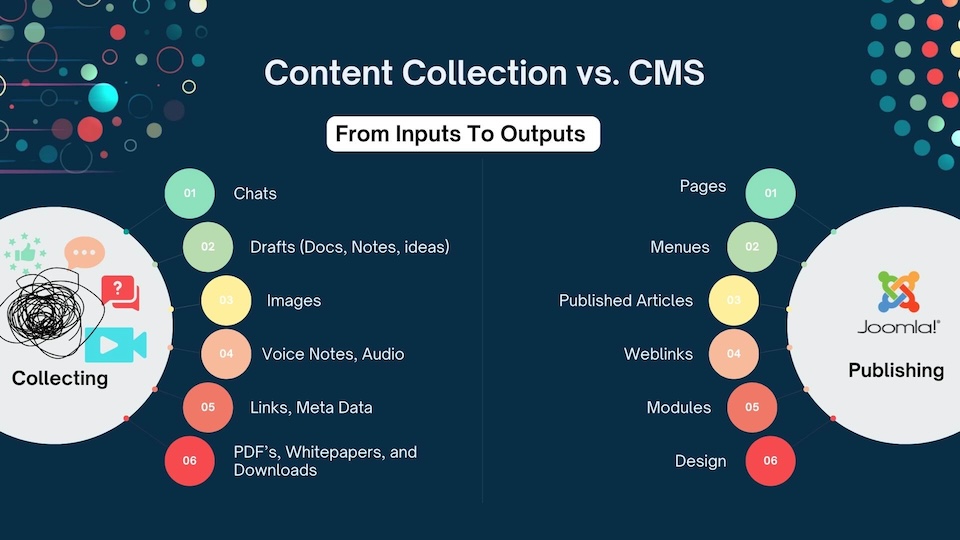
Content Collector Extensions in Joomla
Joomla already has tools that make gathering and organizing content easier before you publish it. I found one worth knowing:
JoomGrabber by JoomBoost – Imports content from outside sources like RSS feeds or social media.
JoomGrabber is an aggregator extension that fetches content from external sources, like RSS, XML, NewsML, YouTube, eBay, or email, and imports it into your Joomla site. It integrates with third-party extensions such as K2, FLEXIcontent, DocMan, or VirtueMart. You get full control over where the content comes from, how it’s reformatted, and where it ends up.
These extensions don’t replace Joomla’s publishing tools. They help fill in the missing step: turning scattered pieces of content into something usable - Collecting.
Why It Matters to Joomla Users
For Joomla site builders, the pain isn’t just technical, it's organizational. Without a clear way to gather content, projects stall. Pages sit empty while designers wait for text, or beginners copy-paste from old sites just to get something live.
Good content collection practices change that:
- Less chasing: No more digging through drives, emails, or old sites for the “real” version.
- Consistency: Everyone works from the same approved assets, so what gets published in Joomla is accurate.
- Speed: Projects move faster because editors can focus on layout and design instead of wrangling files.
- Stronger results: A steady flow of collected content keeps Joomla sites fresh, up-to-date, and useful.
When content is organized before publishing, Joomla becomes what it’s meant to be: a smooth, reliable publishing engine.
Practical Examples
Content collection isn’t abstract it’s part of the everyday work Joomla users already do. A few common roles highlight the difference:
- Webmaster: Instead of hunting for the “latest” logo in old email threads, keep all approved assets in one collected source. When it’s time to update a Joomla template, you know exactly which file is correct.
- Project Manager: Updates come from chats, drives, and meetings. Collect them into one space so you can hand editors a clean, current version ready for Joomla, instead of juggling five versions of the same paragraph.
- Community Lead: The same questions pop up again and again in Discord, forums, or Facebook groups. Collect those answers and reuse them to build Joomla Magazine FAQ pages or knowledge base articles.
Each example shows how upstream organization makes Joomla publishing faster and more consistent.
The Other Half of the Equation
A CMS like Joomla is built to publish polished content. But the real work starts earlier with collection. Without gathering, organizing, and clarifying, publishing becomes a scramble.
Think of it as two halves of the same process:
- Content Collection → managing inputs: chats, drafts, images, and notes
- Joomla CMS → managing outputs: pages, menus, and articles
When you connect both halves, projects move smoothly from idea to live page. Joomla shines brightest when paired with good collection practices.
Call to Action
If you’re part of the Joomla community, don’t just think about publishing look upstream. Start capturing insights before they vanish, and set up simple systems for clients and contributors to drop content in the right place.
The Joomla Community Magazine is built from the same process. Articles begin as scattered ideas and conversations, then get collected, clarified, and finally published.
Happy 20th, Joomla. Here’s to the next twenty years of faster launches and fewer content delays.
How do you collect content before it reaches Joomla? Share your approach, tools, and tips with the community you might help the next webmaster or project manager avoid the endless content chase.
Some articles published on the Joomla Community Magazine represent the personal opinion or experience of the Author on the specific topic and might not be aligned to the official position of the Joomla Project
About the author

By accepting you will be accessing a service provided by a third-party external to https://magazine.joomla.org/
Comments